

It is a warm Brisbane evening. The lights are on, the doors are open and the breeze is finally moving through the house. Then a thought crosses your mind: can anyone outside see straight in? It is a common worry, especially for homeowners who have noticed how private their screens feel during the day. This guide explains what really happens after dark, why it changes, and how to enjoy open summer evenings without feeling on display.
Can People See Into Your Home Through Security Screens at Night?
Yes. At night, when your lights are on and it is dark outside, people can usually see into your home through security screens. The mesh softens the view a little, but it does not make a lit room private.
The reason is light, not the screen. Whichever side is brighter is easier to see into. During the day, the outside is brighter, so your home is hard to see into. At night the situation reverses, and your lit interior becomes visible from the dark street or yard.
The short version:
- Daytime: security screens offer good privacy from the outside
- Night time with lights on: people outside can generally see in
- The fix: manage your lighting and add blinds or other privacy options where needed
Why Screens Look One Way in Daylight and Change After Dark
Many homeowners notice something surprising after their screens go in. During the day, it is hard to see into the house from the street. You can see out clearly, but passers-by mostly see the screen itself. That privacy comes from daylight bouncing off the mesh. When the sun is shining, the outside of the screen catches bright light. Someone looking in sees mostly that reflected light and very little of the darker room behind it. Meanwhile, you are standing in the dimmer interior looking out towards the bright view, so the mesh barely registers.
After dark, everything flips. The outside of the mesh catches little light, so it stops hiding what is behind it. Your lit room becomes the brightest thing in view, and the effect works in reverse.
The Real Reason It’s About Light, Not the Mesh
This is the key point: visibility through any screen depends on the relative light levels on each side.
Think of it as a simple rule:
- The darker side can see into the brighter side
- The brighter side struggles to see into the darker side
This applies to security screens, flyscreens, tinted glass and even ordinary windows. It is the same reason you can see into lit houses as you drive past at night, while the people inside see little more than their own reflection in the glass. So when people ask whether a particular screen is private at night, the honest answer is that no screen will fully overcome a big difference in light. The good news is that once you understand this, privacy becomes much easier to manage.
How Much Can Someone Outside Actually See With Your Lights On
It depends on a few factors, so it helps to set realistic expectations.
Things that make your home more visible:
- Bright overhead lights near the screen
- A dark street or yard outside
- Someone standing close to the screen
- Light coloured walls and furniture that reflect light
Things that make your home less visible:
- Soft, low lighting placed away from openings
- An outdoor light on near the screen
- Greater distance between the viewer and the screen
- Viewing from an angle rather than straight on
In practice, someone walking past on the footpath may see movement, shapes and general activity in a bright room. Someone standing right at the screen with lights blazing inside will see considerably more. The mesh adds some texture and softens detail, but it should not be relied on for privacy at night.
Do Darker or Finer Meshes Improve Night Time Privacy?
This is one of the most common questions we hear, and the answer is: only slightly.
Mesh colour, weave and finish do affect how a screen looks and how much it softens the view. A tighter weave interrupts sightlines a little more, and different finishes reflect light differently. These details can make a small difference to how visible the room is from outside. They do not change the basic rule, though. If your interior is much brighter than the outside, people will still be able to see in.
Darker mesh is generally chosen because it looks cleaner and gives you a clearer view out, which is a big part of why modern stainless steel mesh is so popular. It is a great choice for appearance and outlook, but it is not a night time privacy solution on its own. If privacy matters, it is better to think about your lighting and window coverings than to rely on mesh choice.
Simple Ways to Keep Privacy on Summer Nights With Screens Open
The good news is that a few small changes make a big difference. Try these:
- Turn on an outdoor light near your main screen doors. Balancing the light outside makes it harder to see in.
- Use lamps instead of overhead lights. Low, soft lighting away from windows reduces visibility.
- Rearrange where you sit. Keep living areas and screens slightly offset rather than directly in line with the street.
- Close blinds on street-facing windows and leave rear or side screens open for airflow.
- Add planting or screening outside. Hedges, garden screens and pot plants block sightlines without blocking the breeze.
- Dim lights in rooms you are not using. This keeps the whole house from glowing at the street.
- Open the screens that face the most private parts of the yard. Often a back door or side window gives you plenty of airflow with far less exposure.
These habits let you keep the house open and the air moving while staying comfortable.
Privacy and Security Together: What Screens Do and Don’t Solve
It helps to be clear about what security screens are designed to do.
What security screens do:
- Provide a strong barrier against forced entry
- Let you leave doors and windows open safely
- Keep insects out when properly fitted
- Allow light, views and airflow
- Offer good privacy during daylight hours
What security screens don’t do:
- Make a brightly lit room private at night
- Replace curtains or blinds for full privacy
The most important point is this: even if someone can see in, they cannot get in. A quality stainless steel security screen means an open door is a secure door. For many homeowners, that peace of mind is what matters most, and privacy is easy to manage with lighting and coverings.
When You Need More Than a Screen: Blinds, Film and Layered Options
For rooms where privacy really matters, such as bedrooms, bathrooms or front living areas, a layered approach works best.
- Internal blinds or curtains
The simplest and most effective night time privacy option. Use sheer curtains for softer privacy, or block-out blinds for full coverage.
- Window film
Privacy or frosted films on glass can reduce visibility, particularly on fixed windows or street-facing panes. Ask whether film suits the windows you are screening.
- External screening and landscaping
Garden screens, battens, hedges and planter boxes block direct sightlines from the street while keeping the airflow open.
- Smart screen placement
Keep your most open screens on the private sides of the home, and use coverings on the street side.
Combining security screens with one or two of these options gives you security, privacy and airflow at the same time.
Does Better Privacy Mean Losing Your View and Breeze?
Not at all. The beauty of modern security screens is that they let you keep your view and breeze during the day, while daylight gives you natural privacy.
At night, a few simple choices let you keep most of that benefit:
- Leave rear and side screens open for cross ventilation
- Close blinds only where they are needed
- Use outdoor lighting to balance visibility
- Enjoy the breeze without worrying about security
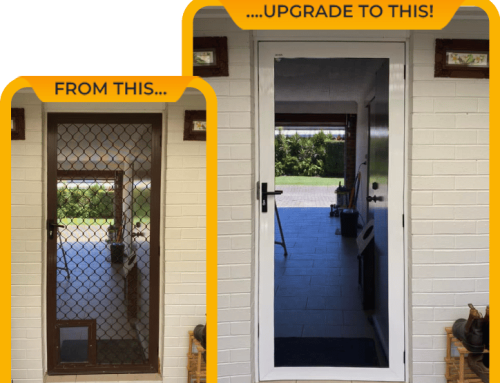
Compare this with older diamond grille screens, which block more of your view and airflow without delivering better privacy at night. A quality stainless steel mesh gives you clearer views and better airflow, and privacy is managed separately and simply.
For Brisbane’s climate, that combination is hard to beat.
Night Time Privacy Questions From Brisbane Homeowners
Can people see through security screens at night?
Yes. If your lights are on and it is dark outside, people can generally see into your home. The mesh softens the view slightly, but it does not provide privacy in a lit room.
Are security screens private during the day?
Generally, yes. Daylight reflects off the mesh, making it hard to see in from outside while you can still see out clearly.
Does black mesh give more privacy?
Only slightly. Mesh colour mostly affects appearance and your view out. Lighting levels have a much bigger impact on privacy.
How can I stop people seeing in at night?
Turn on an outdoor light, use lamps instead of overhead lights, and close blinds or curtains on street-facing windows.
If people can see in, is my home still secure?
Yes. Visibility and security are separate. A quality stainless steel security screen still provides a strong barrier against forced entry, even when it is see-through.
So, can you see through security screens at night? Yes, when your lights are on and it is dark outside. The screen is not the issue. Light is.
Key points:
- Daylight gives security screens natural privacy
- At night, the brighter side becomes the visible side
- Mesh colour and weave make only a small difference
- Lighting, blinds and landscaping are your best privacy tools
- Security stays intact, because seeing in is not the same as getting in
With the right combination, you can keep doors and windows open on summer nights, enjoy the breeze and still feel comfortable at home.
Want advice on the right screens for your home? Call Securelux on 1300 11 51 51 or request a free quote online. Our team can talk you through screens, placement and options that suit the way you live.
Leave A Comment