
It is one of the most common questions we hear from Brisbane homeowners, and it usually arrives with a nervous laugh: “If there is a fire, are we locked in?”
It is a fair question. A security screen is designed to stop someone getting in. So it is reasonable to wonder whether it also stops you getting out. The short answer is that a properly specified security screen emergency exit lets you leave quickly, without keys, without tools, and without strength you may not have in a panic. The longer answer is that this only happens when the screens are planned room by room, by an installer who understands where escape routes need to be.
This guide explains how emergency release systems work, which rooms need them, what the Australian Standards and building rules expect, and the mistakes that quietly turn a safety feature into a hazard.
What Happens if You Need to Get Out and a Security Screen Is in the Way
Picture a bedroom at 2am. Smoke is in the hallway, so the door is not an option. The window is the escape route, and behind the glass is a fixed security screen.
If that screen is a standard fixed unit, it is doing exactly what it was built to do. It will not push out. Stainless steel mesh clamped into an aluminium frame is not something a person can kick through, which is the entire point of the product.
This is why the escape question is not really about whether security screens are dangerous. It is about specification. A home fitted entirely with fixed screens and no planned egress points has a genuine problem. A home where the right windows and doors carry an emergency release has a security screen emergency exit at every point that matters.
The practical distinction to hold on to:
- Fixed screens are permanent barriers. Excellent for windows that are not escape routes.
- Hinged and sliding screens open with the window or door and are usually not a barrier at all.
- Emergency release screens stay locked and secure from outside, but swing open from inside in seconds.
How Emergency Release Security Screens Actually Work
An emergency release screen looks identical to a standard fixed screen from the street. The difference sits on the inside.
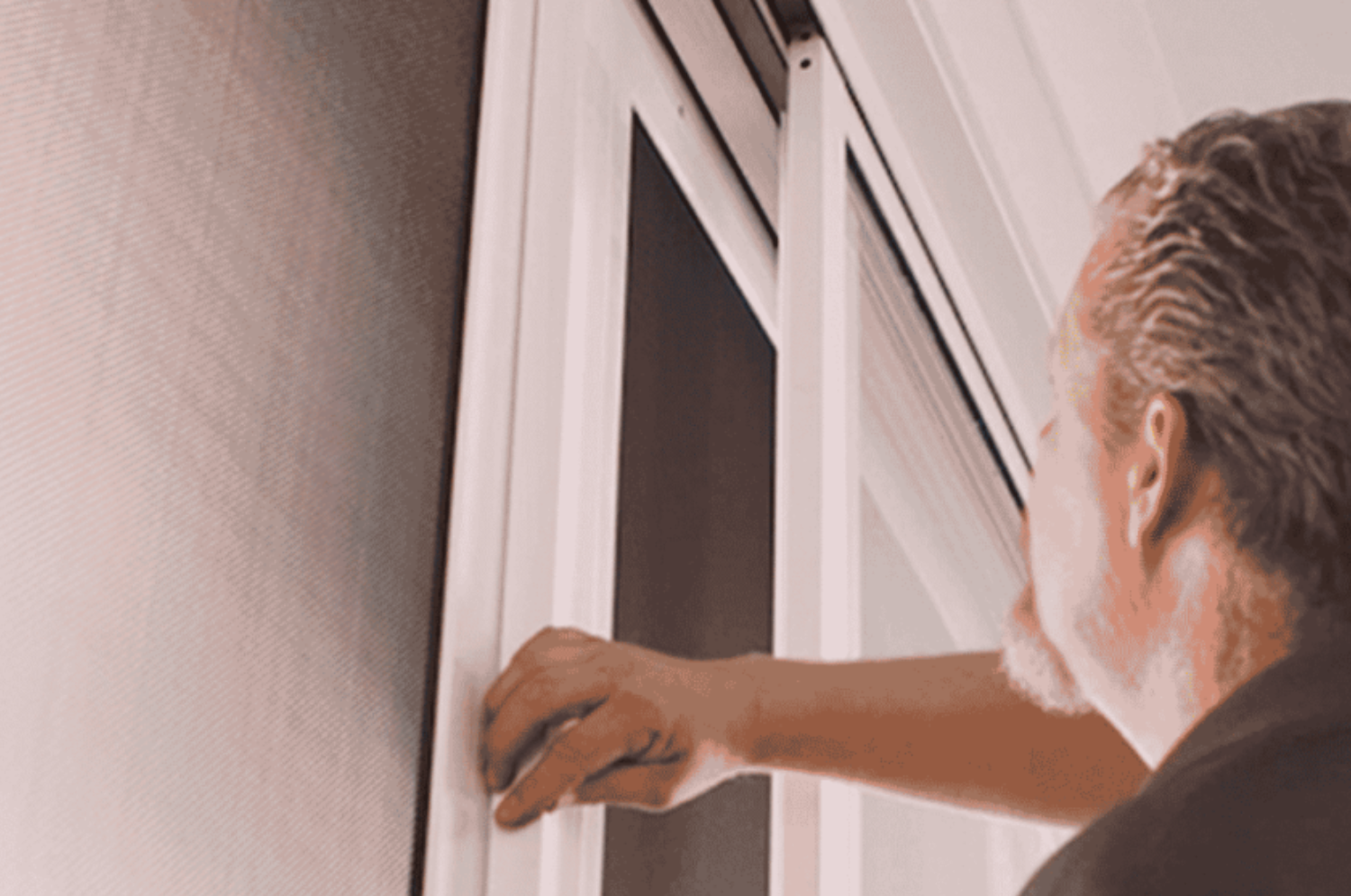
The screen is hinged along one edge and held closed by a release mechanism on the opposite side. From inside the room, you operate a lever, latch or pull handle and the entire screen swings outward like a gate. From outside, there is nothing to grab, unlatch or lever open.
Several design details make this reliable under stress:
- No key required. Fumbling for a key in smoke is a failure point, so escape hardware is keyless by design.
- Single action release. One movement, not a sequence of steps to remember.
- Low force operation. The mechanism is designed to be operated by someone who is frightened, half asleep or physically small.
- Full opening. The screen clears the window opening entirely so you are not climbing through a partial gap.
Some releases sit at the base of the screen, others at the side or centre. The right choice depends on window height, sill depth and who sleeps in that room. On doors, the equivalent is a snib or internal release on the emergency exit set, which lets you leave without unlocking the deadlock.
The security trade-off is smaller than most people expect. The release is only accessible from inside, behind glass and behind a locked window. An intruder outside cannot reach it without first breaking the window, and even then the mesh and frame remain in the way.
Which Rooms Legally and Practically Need an Escape Route
The general principle is simple. Any room where a person sleeps, and any room where the only other way out could be blocked by fire, needs a viable second exit.
Working through a typical Brisbane home:
Bedrooms. Every bedroom should have at least one openable escape point. This is the highest priority room in the house.
Living areas and open plan spaces. These usually have doors to outside, so escape is already covered. Fixed screens are generally fine on the windows.
Home offices and rumpus rooms. If someone naps, works late or the room could later become a bedroom, treat it as a bedroom.
Granny flats and self contained spaces. These need their own escape plan rather than relying on the main house.
Second storey rooms. Escape is still required, but so is fall protection. This is where a screen has to do two jobs at once, keeping children from falling while still allowing an adult to open it in an emergency.
Bathrooms, laundries and small windows. Often too small to climb through anyway. Fixed screens are usually the correct choice.
A useful test: stand in each room, ignore the main door, and ask how you would get a sleeping child out through the window. If there is no clear answer, that room needs an emergency release.
Fire Safety Requirements and Australian Standards for Security Screens
Security screens in Australia are governed by a family of standards. AS 5039 covers the construction and materials of security screen doors and window grilles. AS 5040 covers installation, which matters more than most homeowners realise, since a compliant screen fitted poorly is no longer compliant. AS 5041 covers the test methods used to verify performance.
Separately, the National Construction Code sets expectations for bedroom windows used as escape openings, including minimum clear opening dimensions, and for protection of openable windows above ground level to prevent falls. Queensland also has its own smoke alarm rules requiring interconnected photoelectric alarms in all bedrooms and connecting hallways, which is the other half of a workable escape plan.
Because requirements vary with the age of the home, the storey and whether work is being carried out under a building approval, the safest approach is to have your specific windows assessed rather than relying on a general rule. Your installer should be able to tell you what applies to your property and confirm it in writing on the quote.
Two things worth confirming with any provider:
- That the screens themselves are tested to the relevant standards.
- That the installation is carried out to the installation standard, by employees rather than subcontractors.
Bedroom Windows: The Room Most People Get Wrong
Bedrooms are where the security screen emergency exit question is won or lost, and they are also where corners get cut most often.
The usual pattern goes like this. A homeowner orders screens for the whole house, prices come back, and the bedrooms at the back of the property are switched to fixed units because they are quoted cheaper and because “nobody would break in there anyway”. Two years later, nobody remembers which windows open and which do not.
A few specifics to get right in bedrooms:
- Height matters. A release handle set high on a screen is useless to a child. Position it where the person sleeping in that room can reach it.
- Furniture blocks escape. A bed, wardrobe or study desk pushed against the escape window defeats the whole design. Plan the room layout and the screen together.
- Upper floor bedrooms need both functions. Fall protection and emergency release are not alternatives. Ask for a screen that delivers both.
- Everyone should know. An escape route only works if the people using it have practised it, ideally as part of a household fire plan.
If a bedroom currently has a fixed screen, it can usually be addressed. In most cases the practical fix is replacing that screen with an emergency release unit rather than modifying the existing one.
Can Children or Older Adults Operate an Emergency Release?
This is the question that rarely gets a straight answer, and it deserves one.
Emergency release mechanisms are designed for low force, single action operation, which puts them within reach of most older children and most older adults. But “most” is not “all”, and this is a decision that should be made honestly for the actual people living in the home.
Things to weigh up:
- Young children. A primary school aged child can usually be taught to operate a release, but a toddler cannot. In homes with very young children, the realistic plan is that an adult reaches them, so the layout of the house and the position of alarms matter as much as the screen.
- Arthritis and grip strength. Some release styles need a pinch or twist. Others use a lever or a pull that is far easier on weak hands. Ask to physically test the hardware before you commit.
- Mobility and window height. A release that works perfectly is no help if the sill is chest height for the person using it. Consider what happens after the screen opens.
- Vision and memory. For residents with dementia or low vision, a consistent release type across the whole house is far better than a mix of mechanisms.
The practical advice is to try the hardware in person at the consultation. Everyone in the household who might need to use it should have a turn.
Common Mistakes That Turn a Security Screen Into a Trap
Most escape problems are not product failures. They are planning failures. These are the ones we see most often in Brisbane homes:
- Buying on price per screen. Fixed screens are cheaper, so a quote optimised for price tends to quietly remove escape points.
- Forgetting the room that changed use. The study became a teenager’s bedroom, but the screen never changed.
- Blocking the window. Bedheads, bookcases, air conditioners and blockout blinds all sit in front of escape openings.
- Never testing the release. Hardware that has not been opened in five years should be checked, along with the window itself.
- Assuming the family knows. If your household cannot point to the escape window in each bedroom, the plan does not exist yet.
- Painting or sealing over hardware. Renovation work can jam a release mechanism without anyone noticing.
- Relying on a screen alone. Escape planning includes working smoke alarms, a meeting point outside and a rehearsed route.
- Choosing an unlicensed installer. Poor fitting affects both security performance and how smoothly a release opens.
A yearly check takes ten minutes. Open every escape screen, clear anything blocking it, and walk the route with everyone in the house.
Frequently Asked Questions About Escaping Through Security Screens
Do emergency release screens reduce security? Not meaningfully. The release is only reachable from inside the room, behind a closed and locked window. An intruder would have to defeat the glass and then the mesh and frame before the mechanism became relevant, and the mesh and frame are the parts doing the heavy lifting.
Can you retrofit a release to an existing screen? In most cases the practical answer is to replace the screen with a purpose built emergency release unit rather than modify a fixed one. Retrofitting hardware to a frame that was not engineered for it can compromise both the security rating and the reliability of the release. We assess this on site.
Do you need one on every bedroom? Every bedroom should have a viable escape route. If the bedroom door opens directly to a safe exit and the window is not the designated escape opening, a fixed screen may be appropriate. Because this depends on your home’s layout and its approval history, it is worth confirming for each room rather than applying a blanket rule.
How much extra does an emergency release screen cost? There is a premium over a fixed screen because of the hinges and hardware, but it applies only to the escape windows, which are typically a small share of the total. It is far cheaper than retrofitting later.
How often should I test the release mechanism? At least once a year, and any time you have had painting, renovation or window work done. Test it at the same time you test your smoke alarms so the two habits reinforce each other.
Security screens do not have to be a trade-off between keeping intruders out and getting your family out. The screens that protect your home and the screens you can escape through are the same product, specified correctly.
What matters is planning. Know which rooms are sleeping rooms, put an emergency release on the windows that serve as escape routes, choose hardware the actual people in your home can operate, keep those openings clear, and test them once a year.
If you are unsure whether your current screens would let you out, or you are getting quotes and want the escape points planned properly from the start, talk to Securelux. We will walk your home with you, mark out every egress point, and set it all out clearly in a free, no obligation quote.
Call 1300 11 51 51 or request a free quote online to book your consultation.


Leave a Reply