
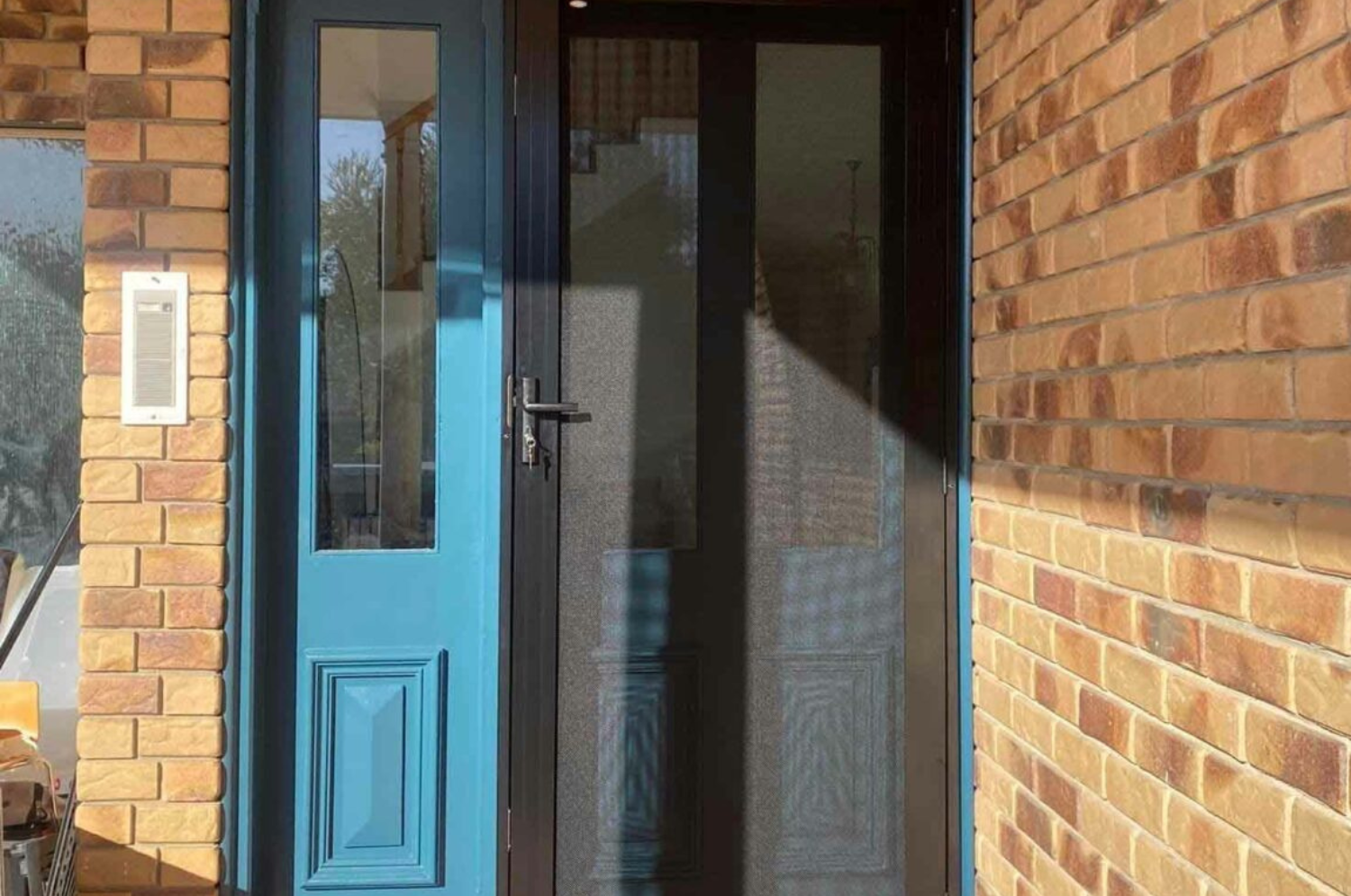
If you own an investment property in Brisbane, security screens sit in an awkward middle ground. They are not something the law forces you to install, but they are something tenants ask for, insurers notice, and property managers quietly recommend when a home is sitting on the market.
So the question most landlords actually want answered is simple. Are security screens for rental properties in Brisbane a compliance issue, a nice to have, or a genuine return on investment?
This guide works through the Queensland minimum housing standards as they actually apply to windows and doors, what happens when a tenant requests screens, how the spend is generally treated at tax time, and the practical side of getting screens installed around sitting tenants.
Are Security Screens Required in Queensland Rental Properties?
Let us clear this up first, because it is the point most landlords get wrong in both directions.
Security screens are not required by Queensland’s minimum housing standards. There is no clause anywhere in the standards that says a rental property must have security screens or security doors fitted.
What the standards do require is that a rental property has functioning locks or latches on all external doors and windows that a person could reach from outside without a ladder. That is a lock requirement, not a screen requirement. A window with a working latch meets the standard even with no screen at all.
Where landlords get caught out is assuming the reverse: that because screens are not mandatory, security is not their problem. It very much is. The standards oblige you to keep the property secure and in good repair, and that obligation is ongoing throughout the tenancy, not just at the start.
There are also two adjacent rules worth knowing:
- Smoke alarms. Queensland requires interconnected photoelectric smoke alarms in all bedrooms, hallways connecting bedrooms and on each storey of domestic dwellings, with rental properties having been captured by this requirement since 1 January 2022. This is a genuine compliance item, unlike screens.
- Fall protection. Where a security screen is fitted to an upper storey window, it may need to satisfy fall protection requirements under the National Construction Code. That is a product specification issue rather than a tenancy one, but it affects what you can install.
The short version: nobody will fine you for not having security screens. But screens are frequently the cheapest way to satisfy a tenant’s legitimate security concerns without a rent reduction or a vacancy.
What Minimum Housing Standards Mean for Screens, Windows and Doors
The minimum housing standards have applied to all Queensland tenancies since 1 September 2024, having phased in for new and renewed agreements from 1 September 2023.
Translating the standards into what they mean for the hardware on your property:
Locks and latches must work, not just exist. A window latch that has painted shut, seized or snapped is a maintenance item. If a tenant reports it, you are on the hook to repair it. Old aluminium sliding windows with worn latches are the most common failure point in Brisbane rentals.
“Reachable without a ladder” is broader than it sounds. It captures ground floor windows, but also windows accessible from a deck, carport roof, retaining wall, fence line or air conditioning unit. Walk the property and think like someone standing on the outside.
Fixtures and fittings must be in good repair. This is where existing screens matter. If your property already has flyscreens or older security grilles, they are fixtures. Rusted, sagging, holed or detached screens can become a repair obligation, and in some cases a safety one.
The obligation is continuous. Compliance is not a box you tick at the start of the lease. A latch that fails in month eight is still your responsibility.
The practical implication for landlords is that a property with tired, patched screens can create more obligation than a property with none. Replacing failing screens with a single quality system is often cheaper over a five year window than repeatedly repairing three different generations of hardware.
Why Tenants Ask for Security Screens and What Happens if You Say No
Tenant requests for screens usually follow a trigger. A break-in nearby. A neighbour’s car stolen. A new baby. A tenant who has started working night shifts. Or simply a Brisbane summer where they want to sleep with the windows open and cannot do it safely.
You are not legally required to say yes. But how you handle the request matters more than most landlords realise.
If you decline, the likely outcomes are:
- The tenant accepts it and the matter ends there. Common enough.
- The tenant asks to install their own screens at their own cost. You can approve or refuse, and you can set conditions. See the FAQ section below.
- The tenant does not renew. This is the expensive outcome. A vacancy plus reletting costs in Brisbane typically runs well beyond the cost of screening a few key openings.
- The tenant raises it as a repair or security issue. If the underlying complaint is actually a broken latch or a door that does not lock properly, that is a repair obligation and declining is not an option.
If you say yes, the practical benefits are:
- A tenant who has just had a security upgrade rarely negotiates hard at renewal.
- You control the product, the installer and the standard, rather than inheriting whatever the tenant chose.
- The asset is improved permanently and stays with the property.
A useful middle path is partial screening. Screen the front and back doors and the bedroom windows, leave the rest. It resolves most of the tenant’s concern for a fraction of a whole-house cost.
Security Screens as a Rental Yield and Tenant Retention Investment
Landlords tend to evaluate screens as a cost. It is more useful to evaluate them as a vacancy reduction tool.
The maths is straightforward. In Brisbane, a single week of vacancy on a typical family home costs a meaningful share of what it costs to screen the main entry points. Two weeks of vacancy plus a reletting fee comfortably exceeds it. Screens that prevent one avoidable turnover in five years have already paid for themselves.
Beyond vacancy, the drivers are:
Listing appeal. Security screens are one of the handful of features that show up in rental listing filters and inspection feedback. On a street with several comparable properties, they are a differentiator that costs you nothing per week.
Tenant quality. Families and long-term renters, the tenants most landlords want, weight security heavily. Short-term tenants generally do not care.
Comfort and running costs. This is underrated in Brisbane. Screens on doors and windows let tenants ventilate the house securely, which reduces air conditioning use and reduces damp and mould complaints. Mould complaints are a minimum housing standards issue you would rather avoid.
Asset protection. A screened door absorbs wear that would otherwise land on the door itself, and it reduces the likelihood of a forced entry that damages frames and locks.
Insurance. Some landlord insurance policies recognise security improvements. Worth a call to your insurer before you install rather than after.
The honest caveat: screens do not usually justify a rent increase on their own in most Brisbane suburbs. Their return shows up in occupancy, tenure and reduced maintenance rather than in weekly rent.
Capital Works or Repairs: How Security Screens Are Treated at Tax Time
This section is general information only. Securelux is not a tax adviser, and you should confirm your own position with your accountant or registered tax agent.
That said, here is the distinction landlords need to understand, because it changes the timing of the deduction significantly.
Repairs and maintenance. Fixing something that has broken or deteriorated while the property was income producing, and restoring it to its previous condition. A repaired latch or a re-tensioned mesh panel typically sits here, and repairs are generally deductible in the year you incur them.
Improvements and capital works. Installing something that was not there before, or replacing an item with something better than the original. Fitting security screens to a property that never had them is generally an improvement rather than a repair. Improvements of this kind are usually treated as capital works and claimed at a set rate over a long period rather than deducted immediately.
Initial repairs. Work done to fix defects that existed when you bought the property is generally not an immediate deduction, even if it looks like a repair. It is typically capital in nature.
Depreciating assets. Some items are treated as separate depreciating assets rather than capital works, depending on how they are installed and whether they form part of the building. This distinction is exactly where an accountant earns their fee.
Three practical habits that will save you money and argument:
- Keep the invoice itemised. A quote that separates supply, installation and any repair work is far easier for your accountant to allocate correctly than a single lump sum.
- Record the date the property became income producing. Timing drives whether something is an initial repair or a genuine repair.
- Get a depreciation schedule. If you are fitting screens across a property or a portfolio, a quantity surveyor’s schedule will usually capture them along with everything else.
Choosing Screens That Survive Multiple Tenancies
An owner occupier chooses screens on looks. A landlord should choose on lifecycle cost.
Rental properties see harder use than owner occupied homes. Doors get slammed, handles get yanked, screens get leaned on, and nobody rinses the salt off the mesh in a bayside suburb. The product that costs 20 percent more upfront and lasts three tenancies longer is the cheaper product.
What to look for:
- Stainless steel mesh, not aluminium. Aluminium mesh dents and corrodes. Stainless steel woven mesh holds its shape and resists Brisbane’s humidity and coastal air.
- How the mesh attaches to the frame. This is the single biggest determinant of long-term performance. Clamped and screw-fixed systems hold up far better under repeated stress than adhesive-bonded systems.
- Compliance with Australian Standards. AS 5039 covers construction of security screen doors and window grilles, AS 5040 covers installation, and AS 5041 covers the test methods. Ask for both product and installation compliance.
- Powder coat quality. A poor coating chalks and fades within a few Brisbane summers, and a faded screen makes the whole property look tired at inspection.
- Hardware you can rekey. Locks that can be rekeyed between tenancies save you replacing the whole door set.
- Replaceable components. A system where a single damaged panel or a worn closer can be swapped is far better than one where the whole unit is disposable.
- Warranty that survives a change of tenant. Confirm the warranty is on the property, not the occupant.
- Emergency egress on bedroom windows. If you are screening bedroom windows, specify emergency release units so the escape route is preserved. This protects your tenants and your position.
Genuine Crimsafe screens are specified for exactly this kind of duty cycle, with stainless steel mesh mechanically clamped into the frame rather than glued. For a rental you intend to hold for a decade, that construction difference is the whole argument.
Coordinating Quotes, Access and Installation Around Tenants
The logistics of installing in a tenanted property trip up more landlords than the product choice does. Handled properly it is straightforward.
Entry notice. Queensland tenancy law requires proper written notice before entry, with different notice periods depending on the reason for entry. Your property manager will handle the correct form and timing. Do not let a tradesperson arrange access informally with a tenant.
Coordinate through one point of contact. If you use a property manager, everything goes through them: quote appointment, measure, install day. Two parties calling the tenant separately is how appointment days get missed.
Measure and install are separate visits. A quote and measure appointment typically takes under an hour. The installation itself is usually a single day for a standard house, sometimes less. Budget for two access events, not one.
Tell the tenant what to expect. Which rooms, roughly how long, whether they need to move furniture away from windows, and whether pets need to be secured. A tenant who has been briefed is a cooperative tenant.
Tenants do not need to be home. With correct notice and access arranged through the agent, most installations proceed without the tenant present. Many prefer this.
Time it to the lease cycle where you can. The cleanest window is between tenancies, when access is unrestricted and there is no disruption to anyone. The second best is early in a new lease, when it reads as goodwill rather than as a response to a complaint.
Document it. Photograph the completed installation and add the screens to the entry condition report or update the property’s fixture record. This protects you at the bond stage.
Multi Property Owners: Standardising Screens Across a Portfolio
If you hold several properties, the calculus changes. The goal shifts from screening one house well to making the whole portfolio easier to manage.
Standardisation delivers real savings:
One product across every property. Same mesh, same frame, same hardware. Your property manager stops having to work out which system is on which house before ordering a repair.
Keying alike within a property. One key per house for the front screen, back screen and any gate reduces lost key incidents and rekeying costs.
Consistent colours. Two or three standard colours across the portfolio means replacement panels can sometimes be moved between properties.
Predictable budgeting. A known per-door and per-window cost lets you build screens into your capital expenditure plan rather than treating each one as a surprise.
One relationship, one warranty process. Chasing a warranty claim across four different installers is a poor use of your time.
Staged rollout. Most portfolio owners fit screens property by property as each one turns over, rather than all at once. It smooths the cash flow and takes advantage of vacant access.
We are happy to talk with landlords and property managers about pricing across multiple properties and about scheduling installations as leases roll over. The right structure depends on the number of properties and the timeline, so it is worth a conversation rather than a formula.
Brisbane Suburbs Where Landlords Are Fitting Screens First
Demand is not uniform across Brisbane. Some patterns we consistently see:
North Lakes, Mango Hill and Griffin. Newer estates with a high proportion of investment stock and family tenants. Tenant expectations here are high, and screens are close to standard on newer listings.
Caboolture, Morayfield and Burpengary. Strong investor ownership and price-sensitive tenants. Screens tend to be fitted to entry doors and bedroom windows rather than whole houses.
Redland Bay, Victoria Point and the bayside. Salt air makes mesh and coating quality non-negotiable. Landlords here learn quickly that a cheap screen is a two-tenancy screen.
Inner north and inner south, including Kedron, Stafford, Annerley and Moorooka. Older housing stock, often with original timber or aluminium windows and worn latches. Screening frequently comes packaged with bringing window hardware up to standard.
Ipswich corridor and outer growth suburbs. Larger blocks, more detached garages and side access, so tenants raise security more often.
Renovated Queenslanders anywhere. High-value fittings and lots of glass. Owners here tend to screen comprehensively and care most about the screens not spoiling the look.
Across all of them, the two openings landlords screen first are the same: the front entry door and the main rear sliding or stacker door.
Landlord Questions About Security Screens, Answered
Can a tenant install their own security screens? Only with your written permission. A tenant cannot make alterations or attach fixtures to the property without the lessor’s consent. If you do approve, put in writing who pays, what standard the work must meet, whether a licensed installer is required, whether the screens stay at the end of the tenancy, and who is responsible if the installation damages the frames. Many landlords find it simpler to install the screens themselves and keep the improvement on the asset.
Who pays if a security screen is damaged? It depends on the cause. Fair wear and tear over a tenancy is the lessor’s cost. Damage caused by the tenant, their household or their guests, whether deliberate or through negligence, is generally the tenant’s responsibility. Damage from a break-in attempt is usually an insurance matter. This is exactly why photographing the screens at entry and exit is worth the five minutes it takes.
Do security screens affect landlord insurance? Some insurers recognise security improvements when pricing a policy, and some policies have conditions about how the property is secured. There is no universal answer, so contact your insurer or broker before you install and ask directly whether screens change your premium or your obligations.
Are security screens tax deductible for a rental property? Screens fitted to a property that did not previously have them are generally treated as a capital improvement rather than an immediate repair, which affects how and over what period you claim. Repairing existing screens is usually treated differently again. Confirm your specific circumstances with your accountant, and keep the invoice itemised.
Do I need emergency release screens on a rental? If you are screening bedroom windows that serve as escape routes, emergency release units are strongly recommended. They preserve the escape path for your tenants, and they are far cheaper to specify at installation than to retrofit later.
How long do quality security screens last in a rental? A well-made stainless steel screen, correctly installed, will typically outlast many tenancies with only occasional hardware servicing. Coastal and bayside properties should expect to rinse mesh periodically to get full life from it.
Security screens are not mandatory in Queensland rentals. What is mandatory is functioning locks and latches on reachable external doors and windows, and keeping the property secure and in good repair throughout the tenancy.
Where screens earn their place is everything beyond compliance. They resolve tenant security requests without a rent concession, they help you retain good tenants, they let a Brisbane house ventilate safely, and they protect the asset. Choose on lifecycle cost rather than sticker price, specify emergency release on bedroom escape windows, standardise across a portfolio, and keep the paperwork clean for tax time.
Securelux has been installing security screens and doors across Brisbane, the northern suburbs and up to Caboolture for close to 40 years. We are a licensed Crimsafe installer, our fitters are employees rather than subcontractors, and we work with landlords and property managers regularly, so we understand entry notices, tenant coordination and turnover timing.
Call 1300 11 51 51 or request a free quote online. If you have multiple properties, tell us how many and we will talk through scheduling and pricing across the portfolio.

Leave a Reply